
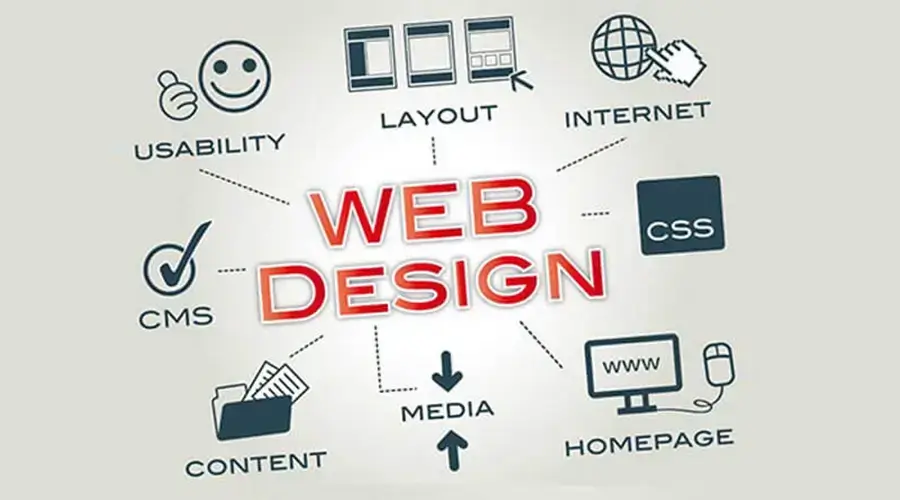
Web Design That Supports Credibility, Clarity, and Conversion
Professional web design focused on conversions
Your website is often the first place people decide whether to trust your business. Our web design services focus on clarity, usability, and alignment ensuring visitors quickly understand who you are, what you offer, and why it matters.
Typical engagements include information architecture, page layout design, responsive design for desktop and mobile, UX considerations, and coordination with development teams or platforms like WordPress, Webflow, or Shopify. We also consider SEO fundamentals, accessibility, and conversion flow from the start.
Instead of designing for aesthetics alone, we design websites as decision-support tools, helping visitors move from curiosity to confidence without friction.

Take Your Digital Presence and Business Growth to the Next Level
Ready to accelerate real business results?
Our team builds powerful, customized AI-enabled marketing strategies that strengthen visibility, increase qualified leads, and turn online potential into measurable revenue. Every plan is tailored to your goals and supported by experts who focus on performance, clarity, and continuous improvement. Client success is our highest priority, and we are committed to driving results that truly move your business forward.
Start your next stage of growth today. Let’s discuss your goals and create a strategy built for impact.
Web Design as a Business System, Not a Visual Exercise
Web design is often framed as a creative discipline. In practice, it is a business system that governs how users interpret, trust, and act within a digital environment.
Every website answers a set of implicit questions for the visitor:
- Who is this for?
- What does this do for me?
- Why should I trust it?
- What happens next?
Web design determines how clearly and confidently those questions are answered. When design fails, it is rarely because a site looks bad. It fails because meaning is unclear, friction is high, or trust is undermined.
Professional web design services exist to engineer clarity, not decoration.
Why Websites Function as Decision Environments
A website is not a brochure. It is an environment in which decisions are made.
Users arrive with limited attention, incomplete information, and varying levels of intent. Web design shapes how they navigate uncertainty. Layout, hierarchy, spacing, typography, and interaction design all influence how quickly a visitor can orient themselves and decide whether to continue.
Web design succeeds when it reduces cognitive effort and increases decision confidence.
The Difference Between Website Aesthetics and Website Design
Aesthetics describe how something looks. Design describes how something works.
A visually appealing website can still fail if:
- users cannot find what they need
- value propositions are ambiguous
- calls to action are unclear
- trust signals are missing or buried
Effective web design integrates aesthetics into function. Visual choices exist to support comprehension, not replace it.
This distinction is foundational to professional web design services.
Web Design as the Translation Layer Between Brand and User
Brands speak in strategy. Users think in needs.
Web design translates brand intent into user-understandable signals. It bridges:
- internal language and external understanding
- product features and perceived value
- brand positioning and lived experience
When translation fails, even strong offerings appear weak. When translation succeeds, complexity becomes approachable.
Web design is therefore a meaning-making discipline, not a styling exercise.
Why First Impressions Matter More Online Than Anywhere Else
Websites do not benefit from social context.
In physical environments, trust can be inferred from surroundings, people, or reputation. Online, the website is the environment. Users form judgments in seconds based on structure, clarity, and coherence.
Web design directly influences:
- perceived credibility
- perceived competence
- perceived relevance
These judgments determine whether the visitor engages or exits.
Web Design as a Trust-Building Mechanism
Trust online is constructed, not assumed.
Design signals trust through:
- consistency
- professionalism
- clarity of intent
- transparency of information
- ease of use
Small inconsistencies—misaligned spacing, confusing navigation, unclear hierarchy—can erode trust disproportionately.
Professional web design services focus on trust continuity across every page and interaction.
Why Web Design Is Central to Conversion, Not Adjacent to It
Conversion does not happen at the call-to-action. It happens gradually, as friction is removed and confidence accumulates.
Web design supports conversion by:
- guiding attention
- sequencing information logically
- reducing uncertainty at each step
- making actions feel safe and obvious
Poor design forces users to work harder to decide. Most will not.
Web Design as an Interpretive Framework
Web design sits at the convergence point of all channels.
Paid ads, SEO, social media, and email all deliver traffic to a website. If the site fails to orient, reassure, and guide visitors, upstream efforts lose value.
Web design does not replace marketing channels; it amplifies or negates them.
Why Web Design Must Be Intentional, Not Trend-Driven
Trends change faster than user expectations.
Design trends can support clarity or undermine it. When trends are applied without intent, they introduce novelty at the expense of usability.
Professional web design services evaluate trends through a single lens:
Does this improve understanding and decision-making?
If not, it is noise.
Web Design as a Learning System
Sending more emails does not equal better results.
Volume without relevance erodes trust. Volume without segmentation accelerates fatigue. Volume without intent increases unsubscribes and deliverability risk.
Email marketing optimizes for precision and timing, not frequency.
The Difference Between Broadcast Email and Lifecycle Email
Websites generate feedback continuously.
User behavior reveals:
- what is understood
- where confusion exists
- where trust breaks down
- where friction accumulates
Web design optimization uses this feedback to refine structure, hierarchy, and flow over time. A website is never finished — it evolves with user behavior.
Inputs, Outputs, and Feedback in Web Design
Web design can be modeled as a system.
Inputs
- brand positioning
- content strategy
- user intent
- technical constraints
Outputs
- engagement
- navigation patterns
- conversions
- abandonment
Feedback loops
- analytics
- heatmaps
- user testing
- behavioral patterns
Professional web design services design with feedback in mind, not finality.
Why Custom Web Design Outperforms Templates Over Time
Templates optimize for speed. Custom web design optimizes for alignment.
Templates assume average users and generic goals. Custom web design aligns structure, messaging, and flow to a specific audience and business model.
Over time, alignment compounds. Mismatch does not.
Information Architecture, Navigation Logic, and User Intent Mapping
Most websites fail not because they look unprofessional, but because they are structurally confusing.
Users do not arrive at a website with patience or context. They arrive with a question, a problem, or a vague intent. Information architecture determines whether that intent is acknowledged and guided—or ignored and frustrated.
Professional web design services prioritize structure first, because structure determines whether content can be understood at all.
Why Information Architecture Is the Foundation of Web Design
Information architecture defines how content is organized, labeled, and related.
Before typography, color, or layout decisions matter, users must be able to answer:
- Where am I?
- What can I do here?
- Where should I go next?
If these questions are unclear, visual polish cannot compensate. Structure precedes style.
How Users Actually Navigate Websites
Users do not browse websites linearly.
They scan for cues:
- navigation labels
- headings
- visual groupings
- familiar patterns
They form hypotheses about where information should live and test those hypotheses quickly. When expectations are violated, they leave.
Web design services that understand navigation behavior design confirmation paths, not exploration mazes.
Navigation as Decision Support, Not a Menu
Navigation is often treated as a list of pages. In practice, it is a decision support tool.
Navigation should:
- reflect user priorities, not internal org charts
- group concepts logically
- reduce cognitive load
- signal progression and depth
Excessive or ambiguous navigation forces users to guess. Guessing is friction.
Why Internal Language Breaks External Understanding
Businesses organize internally around teams, services, or processes. Users organize mentally around outcomes and problems.
When navigation mirrors internal language:
- “Solutions”
- “Capabilities”
- “Offerings”
- “Resources”
…it often fails to communicate meaning.
Professional web design services translate internal concepts into user-centered language that reflects intent rather than structure.
Intent Mapping: Designing Pages Around Why Users Arrive
Every page should map to a dominant intent.
Common intents include:
- learning
- comparing
- validating
- deciding
- contacting
When a page tries to serve multiple intents equally, it serves none well.
Intent mapping ensures that:
- page purpose is clear
- content hierarchy supports that purpose
- calls to action feel appropriate
This clarity improves both engagement and conversion.
Why “More Content” Often Reduces Performance
More content increases complexity.
Without clear hierarchy, additional content dilutes meaning. Users cannot determine what matters and disengage.
Professional web design services favor content prioritization over content accumulation.
Less, when structured well, often performs better than more.
Information Hierarchy as a Trust Signal
Hierarchy communicates confidence.
When information is:
- ordered logically
- visually differentiated
- progressively disclosed
…it signals professionalism and competence. Flat or chaotic pages suggest disorganization, even if content quality is high.
Trust is inferred structurally before it is earned verbally.
The Role of Page-Level Architecture
Each page is a micro-environment.
Page-level architecture governs:
- section order
- emphasis
- pacing
- flow
Users should never wonder:
- why this section exists
- how it connects to the previous one
- what they are expected to do next
Web design services that focus on page architecture reduce friction without adding persuasion.
Navigation Depth vs Navigation Breadth
Too shallow, and navigation becomes overwhelming.
Too deep, and navigation becomes hidden.
Optimization balances breadth and depth so that:
- primary options are visible
- secondary options are discoverable
- tertiary options do not clutter
This balance improves findability and reduces abandonment.
Progressive Disclosure and Cognitive Load
Users cannot process everything at once.
Progressive disclosure reveals information in stages:
- core value first
- supporting details second
- technical depth only when needed
This mirrors natural decision-making and reduces fatigue.
Web design services apply progressive disclosure intentionally rather than accidentally.
Why Footer Navigation Matters More Than It Seems
Footers capture different intent.
Users who scroll to the footer are often:
- validating credibility
- looking for reassurance
- seeking secondary information
Footer design supports trust, completeness, and orientation. Neglecting it leaves high-intent users unsupported.
Structural Consistency Across Pages
Consistency reduces learning cost.
When structure changes unpredictably:
- users must reorient repeatedly
- confidence drops
- errors increase
Professional web design services maintain consistent patterns while allowing contextual variation.
Why Breadcrumbs, Labels, and Microcopy Matter
Small structural cues provide reassurance.
Breadcrumbs confirm location. Labels clarify meaning. Microcopy guides action.
These elements reduce uncertainty at decision points, especially in complex sites.
Information Architecture and SEO Alignment
Search engines reward clarity.
Well-structured sites:
- communicate topical relevance
- improve crawlability
- reinforce semantic relationships
Information architecture is therefore foundational not only to UX, but to SEO performance.
Professional web design services align structure with search intent without compromising usability.
The Cost of Misaligned Architecture
Poor architecture creates hidden costs:
- increased bounce rates
- lower conversion rates
- higher support burden
- wasted marketing spend
These costs compound silently over time.
The Core Question of Information Architecture
Every architectural decision should answer:
Does this make it easier for a user to understand where they are, what matters, and what to do next?
If yes, the structure supports performance. If no, it undermines it.
Content Hierarchy, Layout Systems, and Conversion-Focused Web Design
Web design does not persuade by telling users what to do.
It persuades by making the next step feel obvious.
Conversion-focused web design is often misunderstood as aggressive or manipulative. In reality, the most effective websites reduce friction so thoroughly that action feels natural rather than forced.
This section explains how content hierarchy and layout systems guide attention, support understanding, and enable conversion without pressure.
Why Layout Is an Attention Management System
Attention is finite and directional.
Users do not absorb entire pages. They follow visual cues—size, contrast, spacing, alignment—to decide what deserves focus.
Layout determines:
- what is noticed first
- what is skipped
- what is remembered
Professional web design services treat layout as attention choreography, not decoration.
Visual Hierarchy as Implicit Instruction
Hierarchy tells users how to read a page.
Through hierarchy, design communicates:
- what is most important
- what supports it
- what can be ignored
Without hierarchy, users must infer importance themselves, which increases cognitive load and abandonment.
Effective hierarchy removes the need for interpretation.
The Relationship Between Content Density and Comprehension
More information does not equal more understanding.
High content density overwhelms scanning behavior. Low density without structure feels empty. The balance lies in structured density, where information is grouped and sequenced logically.
Web design services optimize density so that complexity is manageable rather than avoided.
Why White Space Is Functional, Not Aesthetic
White space creates separation, not emptiness.
It allows users to:
- distinguish sections
- process information in chunks
- recover attention
Crowded pages feel urgent and chaotic. Appropriately spaced pages feel confident and trustworthy.
White space supports comprehension before it supports beauty.
Content Hierarchy vs Content Order
Hierarchy is not simply top-to-bottom order.
It is about relative emphasis. A supporting point can appear early or late, but must visually read as subordinate.
Design systems use:
- typography scale
- spacing
- alignment
- contrast
…to communicate hierarchy without relying on placement alone.
Designing for Scanning, Not Reading
Most users scan first, then read selectively.
Web design services structure content so that scanning:
- reveals page meaning
- communicates value quickly
- guides deeper reading
This includes:
- clear headings
- short paragraphs
- visual anchors
- predictable patterns
Design that requires full reading to understand fails most users.
Conversion as a Gradual Process
Conversion happens incrementally.
Users move through stages:
- orientation
- evaluation
- validation
- commitment
Design supports this progression by:
- sequencing information
- reducing uncertainty at each stage
- placing calls to action when readiness is highest
Conversion-focused web design respects timing rather than forcing action prematurely.
Why Calls to Action Should Feel Inevitable
Effective calls to action do not interrupt.
They appear at moments where:
- questions have been answered
- value is clear
- risk feels manageable
When placement is correct, CTAs feel like conclusions rather than demands.
The Role of Repetition in Conversion Design
Repetition reinforces clarity.
Key messages should appear multiple times, framed differently:
- headline
- supporting copy
- visual cues
- callouts
This repetition reduces misinterpretation and increases recall.
Professional web design services repeat intentionally, not redundantly.
Designing for Confidence, Not Urgency
Urgency can motivate action, but it often increases anxiety.
Confidence-driven design:
- emphasizes clarity
- highlights reassurance
- minimizes risk
Users act more readily when they feel informed and safe than when they feel pressured.
Trust Signals as Structural Elements
Trust signals are not add-ons.
They belong within the flow of information:
- testimonials near claims
- credentials near promises
- guarantees near CTAs
This placement reinforces credibility contextually rather than defensively.
Why Consistency Improves Conversion Rates
Consistency reduces friction.
When buttons, layouts, and interactions behave predictably, users move faster and with more confidence.
Inconsistent design forces users to relearn patterns repeatedly, increasing hesitation.
Micro-Interactions and Behavioral Feedback
Small interactions provide reassurance.
Hover states, transitions, confirmations, and animations communicate responsiveness and care. These micro-interactions reduce uncertainty and reinforce trust.
They should support clarity, not distract from it.
Mobile-First Design as a Conversion Imperative
Mobile users behave differently.
They:
- have less attention
- scan more aggressively
- tolerate less friction
Conversion-focused web design prioritizes mobile clarity rather than adapting desktop layouts downward.
Why Design Must Account for Emotional State
Users arrive with emotion:
- curiosity
- frustration
- skepticism
- urgency
Design should acknowledge and stabilize emotion rather than escalate it. Calm, clear interfaces improve decision quality.
The Cost of Over-Designing for Conversion
Over-designed pages feel manipulative.
Excessive pop-ups, aggressive CTAs, and visual noise degrade trust. Conversion drops not because users resist action, but because they resist pressure.
Professional web design services favor restraint over aggression.
Conversion Design and SEO Alignment
Search intent influences readiness.
Pages must align design with intent:
- informational pages prioritize clarity
- comparison pages prioritize structure
- transactional pages prioritize ease
Misalignment between intent and design increases bounce rates and reduces rankings.
The Core Question of Conversion-Focused Design
Every design decision should answer:
Does this make it easier for a user to understand, trust, and act without hesitation?
If yes, the design supports conversion. If no, it introduces friction.
Performance, Accessibility, Responsiveness, and Constraint Optimization in Web Design
Web design does not end where visual design stops.
A website can look clear, feel intuitive, and communicate value; yet still fail if it loads slowly, excludes users, or breaks under real-world conditions. Performance, accessibility, and responsiveness are not technical concerns layered on top of design. They are integral to the experience itself.
Professional web design services treat constraints as design inputs, not obstacles.
Why Website Performance Is a Design Problem
Performance shapes perception.
Users do not separate speed from quality. A slow site feels unreliable. A lagging interaction feels careless. A delayed response introduces doubt before content is even seen.
Performance affects:
- perceived professionalism
- trustworthiness
- patience thresholds
- conversion likelihood
Design that ignores performance undermines itself.
Load Time as a Trust Signal
Users interpret load time emotionally.
A fast site signals:
- competence
- care
- modernity
A slow site signals:
- neglect
- friction
- risk
This interpretation occurs subconsciously. Web design services optimize performance because first impressions happen before content is read.
Why Performance Optimization Must Happen at the Design Stage
Performance cannot be fully fixed after design is complete.
Design decisions influence:
- image usage
- animation complexity
- font loading
- layout rendering
Designing with performance in mind prevents costly compromises later. Performance-aware design is more effective than performance repair.
Accessibility as an Experience Multiplier
Accessibility improves usability for everyone.
Design choices that support accessibility; clear contrast, readable typography, logical structure also improve comprehension for all users, not just those with disabilities.
Accessible web design:
- reduces cognitive load
- improves navigation clarity
- increases overall reach
Professional web design services view accessibility as a quality benchmark, not a compliance checkbox.
Why Accessible Design Is Good Business Design
Accessibility expands the usable audience.
It also:
- improves SEO
- reduces bounce rates
- increases clarity
Search engines favor accessible structure because it mirrors human readability. Accessibility and performance reinforce one another.
Structural Accessibility Over Visual Accessibility
True accessibility begins with structure.
Semantic HTML, logical heading order, and predictable navigation enable screen readers and assistive technologies to interpret content correctly.
Visual adjustments without structural support create superficial accessibility that fails in practice.
Responsiveness as Behavioral Alignment
Responsive design is not about fitting screens. It is about aligning with behavior.
Mobile users:
- scan more aggressively
- act faster or abandon faster
- tolerate less friction
Responsive web design adapts content priority, spacing, and interaction patterns—not just layout width.
Why Mobile-First Is a Design Discipline, Not a Trend
Mobile-first design forces prioritization.
When space is limited, only what matters survives. This discipline often improves desktop experiences as well by clarifying hierarchy.
Professional web design services use mobile constraints to sharpen focus rather than treating mobile as a secondary concern.
Touch, Scroll, and Interaction Design
Interaction patterns differ by device.
Design must account for:
- thumb reach
- scroll behavior
- tap precision
Ignoring these realities introduces subtle friction that accumulates into abandonment.
Constraint Optimization: Designing Within Limits
Constraints clarify intent.
Unlimited space, bandwidth, and options encourage over-design. Constraints force prioritization and clarity.
Effective web design embraces constraints such as:
- screen size
- load budgets
- accessibility standards
- content availability
Constraints guide better decisions rather than limiting creativity.
Why Simplicity Scales Better Than Complexity
Complex designs are fragile.
They break under:
- slower connections
- older devices
- accessibility tools
Simple, robust designs maintain integrity across contexts. Professional web design services optimize for resilience, not novelty.
Performance, Accessibility, and Conversion Are Interlinked
These elements reinforce each other.
A fast site improves engagement. An accessible site improves comprehension. A responsive site improves usability.
Together, they reduce friction and increase conversion confidence.
The Hidden Cost of Ignoring Constraints
Ignoring constraints creates downstream costs:
- increased maintenance
- inconsistent experiences
- declining engagement
Constraint-aware design prevents technical debt from becoming user-facing debt.
Designing for Failure Scenarios
Good design anticipates failure.
Slow connections, partial loads, broken assets—these scenarios still require clarity. Graceful degradation preserves usability when conditions are imperfect.
Why Technical Decisions Are Design Decisions
Choosing frameworks, plugins, and integrations affects:
- speed
- reliability
- security
- scalability
Web design services collaborate with development intentionally to align technical choices with experience goals.
Performance Budgets as Design Guardrails
Performance budgets define acceptable limits.
They prevent incremental degradation and keep design decisions accountable to user experience.
Designing within budgets protects long-term quality.
Accessibility as a Continuous Practice
Accessibility evolves with content.
As sites grow, accessibility must be maintained. This requires systems, not one-time audits.
Professional web design services embed accessibility into design workflows.
The Core Question of Constraint-Aware Web Design
Every decision in this domain should answer:
Does this design remain clear, usable, and trustworthy under real-world conditions?
If yes, it scales. If no, it breaks.
AI, Personalization, and the Long-Term Future of Web Design
Web design is not becoming obsolete in an AI-driven world.
It is becoming more consequential.
As AI systems increasingly mediate how users discover, evaluate, and interact with digital experiences, the role of web design shifts from presentation to interpretation management. Websites are no longer static artifacts. They are adaptive environments that must remain intelligible to humans and machines simultaneously.
This section explains how AI influences modern web design, why personalization must be governed carefully, and how long-term design advantage is built.
Why AI Changes Web Design Without Replacing It
AI automates execution, not understanding.
Tools can generate layouts, write code, and assemble components quickly. What they cannot do autonomously is determine:
- audience intent
- trust thresholds
- brand meaning
- ethical boundaries
- long-term coherence
Web design remains a human-led discipline because it governs how meaning is structured and perceived. AI accelerates production, but design determines direction.
AI-Assisted Design vs AI-Driven Design
There is a critical distinction.
AI-assisted design:
- supports layout exploration
- accelerates prototyping
- automates repetitive tasks
AI-driven design:
- removes human oversight
- prioritizes efficiency over coherence
- risks fragmentation
Professional web design services use AI as an amplifier of judgment, not a replacement for it.
Personalization as Contextual Adaptation, Not Fragmentation
Personalization is often misunderstood as customization.
True personalization adapts context:
- which information appears first
- how much detail is shown
- which pathways are emphasized
Poor personalization fragments experiences and increases confusion. Effective personalization preserves structural consistency while adapting emphasis.
Why Over-Personalization Undermines Trust
Users expect relevance, not surveillance.
Excessive personalization can feel intrusive, unpredictable, or manipulative. When users cannot explain why they are seeing something, trust erodes.
Web design systems must ensure personalization remains:
- transparent
- predictable
- value-driven
Personalization should clarify, not surprise.
Adaptive Interfaces and Progressive Complexity
Adaptive interfaces respond to behavior gradually.
Rather than changing everything at once, they:
- reveal complexity over time
- adjust guidance based on familiarity
- reduce friction for returning users
This progressive adaptation aligns with how people learn and build confidence.
AI and Information Architecture
AI systems interpret structure.
Search engines, assistants, and summarization tools rely on:
- semantic hierarchy
- clear relationships
- consistent labeling
Well-structured web design improves not only human experience, but machine understanding. Information architecture becomes increasingly critical as AI intermediates access.
Why Foundational Design Principles Still Matter
Technology evolves. Cognition does not.
Humans still:
- scan before reading
- prefer clarity over novelty
- trust consistency
- avoid unnecessary effort
Design principles rooted in cognition remain valid regardless of tooling. AI does not change how people think; it changes how fast systems respond.
Web Design as a Signal Generator in an AI Ecosystem
Websites generate signals.
User behavior on a site informs:
- search ranking
- recommendation systems
- AI training data
Design influences which signals are produced. Confusing design produces noisy signals. Clear design produces interpretable behavior.
Ethical Design in an Adaptive World
As design becomes more adaptive, ethical considerations increase.
Web design services must consider:
- consent
- transparency
- manipulation boundaries
- accessibility equity
Ethical design preserves agency. Users should feel guided, not coerced.
Why Design Systems Matter More Than Individual Pages
Pages change. Systems persist.
Design systems:
- enforce consistency
- reduce error
- enable scalability
- support adaptation
In AI-assisted environments, systems ensure that rapid changes do not degrade coherence.
Long-Term Advantage Comes From Structural Integrity
Trends expire. Structure endures.
Websites that prioritize:
- clarity
- accessibility
- performance
- intent alignment
…remain effective even as tools, styles, and platforms evolve.
Professional web design services focus on structural integrity rather than surface novelty.
Web Design as Organizational Reflection
A website reflects how an organization thinks.
Clear design suggests clarity of purpose. Confusing design suggests internal ambiguity. AI tools amplify whatever already exists.
Design discipline becomes a form of organizational discipline.
Why Web Design Will Remain Central to Digital Strategy
No matter how users arrive; search, social, AI assistants, they eventually evaluate experiences.
Web design governs that evaluation.
It determines:
- trust formation
- comprehension
- confidence
- action
As long as decisions happen online, web design remains indispensable.
The Core Question of Future-Proof Web Design
Every forward-looking design decision should answer:
Does this experience remain clear, trustworthy, and usable as technology and user behavior evolve?
If yes, the design endures. If no, it decays.
Final Perspective on Web Design
Web design is not about keeping up with technology.
It is about staying aligned with human decision-making.
AI will continue to accelerate execution, personalize interfaces, and automate optimization. But clarity, trust, and meaning will remain human concerns.
Web design succeeds when it respects those fundamentals—regardless of how advanced the tools become.
Web Design: Frequently Asked Questions
What is web design in a modern business context?
Web design is the discipline of structuring digital environments so users can understand, trust, and act with confidence. In a modern business context, web design is not limited to visual presentation. It encompasses information architecture, interaction patterns, performance, accessibility, and conversion enablement.
A professionally designed website functions as a decision system, guiding users from uncertainty toward clarity while aligning business goals with user needs.
How is professional web design different from making a website look good?
Aesthetic appeal is a byproduct of good design, not its purpose.
Professional web design focuses on:
- clarity of meaning
- ease of navigation
- trust formation
- reduction of friction
- support for user intent
A site can look attractive and still fail if users are confused, skeptical, or unsure what to do next. Web design succeeds when it makes decisions easier, not just visuals nicer.
Why does web design matter so much for conversion?
Conversion is not a moment—it is a process.
Users convert only after they:
- understand the offer
- trust the source
- feel confident in the outcome
Web design shapes this process by controlling attention, sequencing information, and reducing uncertainty. Poor design forces users to work harder to decide. Most will not.
How does web design affect trust?
Trust online is inferred structurally.
Users judge credibility based on:
- consistency of layout
- clarity of hierarchy
- professionalism of execution
- ease of use
Even small design inconsistencies can undermine trust disproportionately. Web design either reassures users subconsciously or introduces doubt before content is even read.
What is the difference between web design and web development?
Web design defines how an experience should work.
Web development implements that experience technically.
Design governs:
- structure
- hierarchy
- flow
- interaction logic
Development governs:
- code
- functionality
- integrations
- performance implementation
Professional web design services collaborate closely with development, but design decisions should lead, not follow, technical execution.
Why do many websites fail even though they were “professionally built”?
Most failures are structural, not technical.
Common causes include:
- unclear information hierarchy
- navigation based on internal language
- pages trying to serve too many intents
- poor mobile experience
- lack of trust signals
A site can be built correctly and still fail if it is designed around the business instead of the user.
How does information architecture impact web design performance?
Information architecture determines whether content can be understood.
If users cannot quickly determine:
- where they are
- what a page is about
- where to go next
…they disengage. Strong architecture improves usability, SEO, and conversion simultaneously.
Why is navigation design more important than most people think?
Navigation acts as cognitive scaffolding.
It reduces decision fatigue by limiting choices and confirming expectations. Poor navigation forces users to guess. Guessing increases friction and abandonment.
Effective navigation feels obvious because it aligns with user intent rather than internal structure.
How does web design influence SEO?
Search engines reward clarity.
Well-designed websites:
- use clear hierarchy
- group related content logically
- signal topical relevance
- improve user engagement
SEO performance often improves when web design improves because both depend on structure and comprehension.
Why is mobile-first web design so important?
Most users experience websites on mobile first, even if they convert later on desktop.
Mobile-first design forces prioritization:
- only essential content remains
- hierarchy becomes clearer
- friction becomes more visible
Designing for mobile first improves clarity across all devices.
What role does accessibility play in web design?
Accessibility improves usability for everyone.
Clear contrast, readable typography, logical structure, and predictable navigation benefit:
- users with disabilities
- users on poor connections
- users under cognitive load
Accessible design also improves SEO and reduces bounce rates. It is both ethical and practical.
Why is website performance considered part of web design?
Performance affects perception.
Slow websites feel unreliable and unprofessional. Users interpret delays as risk. Performance is shaped by design decisions such as image usage, layout complexity, and interaction patterns.
Design that ignores performance undermines trust before content loads.
What is conversion-focused web design?
Conversion-focused design removes friction rather than adding pressure.
It:
- sequences information logically
- answers questions before asking for action
- places calls to action where readiness is highest
Effective conversion design feels calm and confident, not aggressive.
Why do calls to action sometimes fail even when they are prominent?
Prominence does not equal readiness.
Users ignore calls to action when:
- value is unclear
- risk feels high
- information is incomplete
Design must prepare users before asking them to act.
How does content hierarchy influence user behavior?
Hierarchy tells users what matters.
Through typography, spacing, and layout, design communicates importance without requiring reading. Without hierarchy, users disengage because they cannot determine where to focus.
Hierarchy reduces cognitive effort and increases comprehension.
Why do “more pages” sometimes reduce website effectiveness?
More pages increase complexity.
When pages overlap in purpose or intent, users struggle to choose. This increases confusion and abandonment. Fewer, well-structured pages often outperform larger sites with weak hierarchy.
How does web design support paid advertising and email marketing?
Web design is the conversion layer.
All traffic sources eventually rely on the website to:
- orient visitors
- validate claims
- support decisions
Weak design wastes upstream marketing spend. Strong design amplifies it.
What is the role of design systems in web design?
Design systems ensure consistency and scalability.
They:
- reduce errors
- improve coherence
- speed iteration
- maintain trust across pages
Design systems become increasingly important as sites grow and evolve.
How does web design influence user emotion?
Design stabilizes emotion.
Users often arrive with uncertainty, skepticism, or urgency. Clear design reduces anxiety by making information easy to find and actions easy to understand.
Calm design supports confident decisions.
Why do design trends often hurt long-term performance?
Trends prioritize novelty over clarity.
When trends are applied without intent, they introduce unfamiliar patterns that confuse users. Professional web design services evaluate trends based on whether they improve understanding not whether they look modern.
How does web design interact with AI and search assistants?
AI systems interpret structure.
Clear information architecture improves how:
- search engines index content
- AI tools summarize pages
- assistants extract meaning
Web design increasingly influences machine understanding as well as human experience.
Can web design be personalized without harming clarity?
Yes—when personalization adapts emphasis, not structure.
Effective personalization:
- highlights relevant information
- preserves consistent layout
- avoids fragmentation
Over-personalization confuses users and undermines trust.
Why does restraint matter in web design?
Restraint signals confidence.
Overloaded pages feel desperate or chaotic. Restrained design suggests clarity of purpose and respect for attention.
Users trust what feels intentional.
How often should a website be redesigned?
Redesigns should respond to misalignment, not age.
Indicators include:
- declining engagement
- user confusion
- poor mobile performance
- outdated positioning
Ongoing optimization often prevents the need for disruptive redesigns.
What is the biggest misconception about web design services?
That web design is primarily about visuals.
In reality, professional web design services exist to engineer understanding, trust, and action through structure, hierarchy, and interaction.
How should web design success be evaluated?
Not by appearance alone.
Success is reflected in:
- user engagement
- navigation clarity
- conversion confidence
- reduced friction
- performance stability
Good design feels invisible because it works.
Why does web design have such long-term impact?
Because it shapes perception continuously.
Every visit reinforces or undermines trust. Over time, these impressions compound. Web design is one of the few marketing investments whose value increases when done well.
What ultimately defines excellent web design?
Alignment.
Alignment between:
- user intent
- business goals
- information structure
- visual hierarchy
- technical performance
When these elements reinforce one another, web design becomes a durable competitive advantage rather than a cosmetic expense.
Why does web design often reveal deeper business problems?
Because a website exposes how clearly a business understands itself.
Web design forces decisions about:
- who the site is for
- what problems it solves
- what differentiates it
- what matters most
When these questions are unclear internally, they surface immediately in navigation, messaging, and hierarchy. Web design does not create confusion—it reveals it.
How does web design influence perceived pricing and value?
Design sets context before numbers appear.
A clear, confident website:
- increases perceived value
- reduces price sensitivity
- reframes cost as investment
Conversely, cluttered or confusing design makes even reasonable pricing feel risky. Users evaluate value visually before they evaluate it rationally.
Why do users abandon websites even when the product is strong?
Because understanding precedes belief.
Users abandon sites when:
- value propositions are unclear
- information is hard to find
- effort feels high
- trust is unresolved
Strong products fail online when design makes users work too hard to understand them.
How does web design affect credibility for new or unknown brands?
For unknown brands, the website is the reputation.
Users assess credibility through:
- visual coherence
- content organization
- tone consistency
- technical polish
Web design substitutes for social proof when none exists yet.
Why is clarity more persuasive than persuasion in web design?
Because persuasion without understanding creates resistance.
When users clearly understand:
- what is being offered
- how it works
- why it matters
…they persuade themselves. Web design that prioritizes clarity removes the need for aggressive tactics.
How does web design support complex decision-making?
By reducing cognitive load.
Complex decisions require:
- structured information
- logical sequencing
- progressive disclosure
Web design allows complexity to be navigated without overwhelming the user.
Why do minimalist websites often outperform feature-heavy sites?
Minimalism forces prioritization.
When fewer elements compete for attention:
- meaning becomes clearer
- navigation becomes faster
- trust increases
Minimalism is not about aesthetics—it is about decision efficiency.
How does web design influence brand memory?
Memory is reinforced through repetition and consistency.
Design systems that:
- repeat layouts
- reinforce visual patterns
- maintain tone
…make brands easier to recognize and recall. Inconsistent design fragments memory.
Why does consistency across pages matter so much?
Because inconsistency introduces doubt.
When pages behave differently, users question:
- reliability
- professionalism
- legitimacy
Consistency reduces uncertainty and increases confidence.
How does web design interact with user expectations?
Users arrive with mental models.
They expect:
- navigation in familiar places
- links to behave predictably
- layouts to follow patterns
Design that violates expectations increases friction unless it clearly improves usability.
Why is restraint considered a sign of confidence in web design?
Because confident brands do not need to say everything at once.
Restraint signals:
- focus
- clarity
- authority
Overloaded pages often signal insecurity or lack of prioritization.
How does web design impact decision speed?
Design accelerates decisions by:
- clarifying options
- reducing ambiguity
- signaling next steps
When design slows decisions, users disengage rather than deliberate.
Why is “above the fold” still relevant but misunderstood?
Above-the-fold content sets orientation, not conversion.
It should:
- clarify purpose
- establish relevance
- guide exploration
Trying to force conversion above the fold often backfires.
How does web design influence emotional response?
Design sets emotional tone before content is read.
Typography, spacing, and color influence whether a site feels:
- calm or chaotic
- credible or questionable
- inviting or intimidating
Emotion affects willingness to engage.
Why do some websites feel “heavy” even when they load quickly?
Because cognitive load is separate from technical load.
Dense layouts, unclear hierarchy, and excessive options make sites feel heavy even when performance is good.
Design must optimize mental effort, not just speed.
How does web design support long-term SEO performance?
Search engines favor clarity and engagement.
Design improves SEO by:
- reducing bounce rates
- increasing time on site
- improving content comprehension
- reinforcing topical structure
Design and SEO are structurally linked, not separate disciplines.
Why do redesigns often fail to improve results?
Because redesigns focus on appearance rather than structure.
When underlying issues—unclear messaging, poor hierarchy, misaligned intent—remain unresolved, new visuals change little.
Effective redesigns re-architect, not repaint.
How does web design scale with business growth?
Scalable design anticipates change.
Design systems and modular layouts allow:
- new pages
- new services
- new content
…without breaking coherence. Fragile designs degrade as businesses grow.
Why do users trust websites that feel “boring”?
Because boring often means predictable and clear.
Predictability reduces risk. Users trust environments they understand.
Clarity often outperforms excitement.
How does web design support accessibility beyond compliance?
Accessible design improves:
- readability
- navigation
- comprehension
It benefits all users, not just those with disabilities. Accessibility is usability multiplied.
Why is navigation often the first thing users judge subconsciously?
Because navigation answers “Can I find what I need here?”
If the answer is unclear, users leave before engaging with content.
Navigation clarity is an immediate trust signal.
How does web design reduce support and sales friction?
Clear design answers common questions upfront.
This reduces:
- support tickets
- repetitive sales explanations
- misaligned expectations
Design becomes a silent team member.
Why is web design considered a long-term investment?
Because it compounds perception.
Each visit reinforces trust or doubt. Over time, these impressions accumulate into reputation.
Well-designed sites grow more effective as familiarity increases.
What separates average web design from excellent web design?
Intentionality.
Excellent web design is:
- deliberate
- restrained
- user-centered
- structurally sound
It prioritizes understanding over novelty.
Why is web design increasingly strategic in an AI-driven world?
Because AI intermediates access, but users still evaluate experiences.
Web design governs how brands are understood once discovered—whether by search engines, AI assistants, or referrals.
Design becomes the final arbiter of trust.
What ultimately defines success in web design services?
Alignment over time.
Alignment between:
- user needs
- business goals
- content structure
- visual hierarchy
- technical reliability
When alignment holds, web design becomes a durable competitive advantage.
Why does web design often fail to reflect how users actually think?
Because many websites are designed from the inside out.
Businesses often structure websites based on:
- internal departments
- service categories
- organizational language
Users, however, think in terms of:
- problems
- goals
- outcomes
- next steps
When web design mirrors internal logic rather than user intent, comprehension breaks down. Professional web design services exist to translate internal complexity into external clarity.
How does web design influence perceived legitimacy?
Legitimacy is inferred, not proven.
Users subconsciously evaluate:
- layout balance
- typographic discipline
- alignment consistency
- interaction polish
These cues signal whether a business is established, competent, and trustworthy. Even without explicit proof, design quality strongly influences perceived legitimacy.
Why do users trust websites that feel “simple” more than complex ones?
Because simplicity reduces perceived risk.
Simple websites:
- make fewer demands on attention
- reduce chances of error
- feel easier to navigate
Complex interfaces suggest hidden costs, confusion, or manipulation—even when none exists. Web design that prioritizes simplicity increases psychological safety.
How does web design shape user expectations before content is read?
Structure communicates intent instantly.
Before reading a word, users assess:
- page layout
- visual hierarchy
- navigation placement
These elements tell users what kind of experience they are entering and whether it aligns with their needs. Web design sets expectations faster than language ever could.
Why does good web design feel “invisible” when it works?
Because it removes friction instead of calling attention to itself.
When users:
- find what they expect
- understand information quickly
- move smoothly through pages
…design fades into the background. Poor design draws attention because it interrupts flow.
How does web design affect cognitive trust versus emotional trust?
Cognitive trust comes from clarity.
Emotional trust comes from tone and feel.
Web design supports both by:
- structuring information logically
- maintaining visual consistency
- using restrained, intentional aesthetics
A site that feels emotionally appealing but cognitively confusing still fails. Design must satisfy both dimensions.
Why do websites with strong visuals sometimes still perform poorly?
Because visuals alone do not establish meaning.
Without:
- clear hierarchy
- logical flow
- explicit framing
Visuals become decoration rather than communication. Web design integrates visuals into structure so they reinforce understanding rather than distract from it.
How does web design influence how long users stay on a site?
Time on site is driven by orientation.
Users stay longer when they:
- quickly understand where they are
- see clear pathways
- feel confident exploring
Design that creates disorientation shortens sessions regardless of content quality.
Why is “user experience” not the same as “user happiness”?
User experience prioritizes ease, not pleasure.
A site does not need to delight users. It needs to:
- reduce effort
- remove confusion
- respect attention
Overly playful or clever design can harm usability. Professional web design services optimize for confidence, not entertainment.
How does web design help users make trade-offs?
Trade-offs are inevitable in decisions.
Good web design:
- surfaces key differences
- structures comparisons
- highlights what matters
Poor design hides trade-offs or overwhelms users with detail, leading to indecision or abandonment.
Why do users abandon sites that feel “pushy”?
Because pushiness signals misalignment.
Aggressive pop-ups, constant CTAs, and urgency cues suggest that:
- the site does not trust the user
- the value may not stand on its own
Design that respects autonomy increases willingness to engage.
How does web design contribute to brand authority?
Authority is built through coherence.
When messaging, structure, and visuals align consistently across pages, users perceive the brand as intentional and credible. Fragmented design erodes authority even if content is strong.
Why is typography one of the most underestimated elements of web design?
Because typography governs readability and tone simultaneously.
Type choices affect:
- speed of comprehension
- perceived professionalism
- emotional tone
Poor typography increases fatigue and reduces trust. Good typography disappears into clarity.
How does web design influence user confidence at decision points?
Decision points create vulnerability.
Design supports confidence by:
- placing reassurance nearby
- minimizing uncertainty
- making next steps clear
Users hesitate not because they are unwilling, but because they are unsure. Design resolves that uncertainty.
Why do websites with fewer choices often convert better?
Choice overload increases anxiety.
When too many options are presented:
- evaluation slows
- confidence drops
- abandonment increases
Design that limits choices at each step supports momentum.
How does web design support users who are not ready to convert?
Not all users arrive ready to act.
Design supports early-stage users by:
- offering educational pathways
- avoiding premature CTAs
- allowing exploration without pressure
This respect increases the likelihood of future conversion.
Why does web design often fail when businesses scale quickly?
Because structure is not designed to expand.
Scaling introduces:
- new content
- new services
- new audiences
Without a design system, coherence breaks down. Scalable web design anticipates growth rather than reacting to it.
How does web design reduce internal friction within organizations?
Clear design clarifies priorities.
When teams share a structured website, alignment improves around:
- messaging
- positioning
- value hierarchy
Web design often becomes a unifying reference point internally.
Why is web design considered a form of strategic communication?
Because it communicates without words.
Structure, spacing, hierarchy, and flow convey:
- confidence
- restraint
- focus
These signals shape interpretation as much as copy does.
How does web design affect how AI systems interpret a site?
AI systems rely on structure.
Clear hierarchy and semantic organization improve:
- indexing
- summarization
- extraction
Design increasingly influences how content is understood by machines as well as humans.
Why do users trust websites that feel “calm”?
Calm reduces perceived risk.
Calm design:
- limits visual noise
- avoids unnecessary urgency
- feels controlled and intentional
Users associate calm with competence.
How does web design influence repeat visits?
Familiarity increases efficiency.
Consistent design patterns allow returning users to:
- navigate faster
- reorient instantly
- feel at ease
This familiarity strengthens loyalty and engagement over time.
Why is web design never truly finished?
Because users, businesses, and contexts evolve.
A website must adapt to:
- changing user behavior
- new offerings
- shifting expectations
Web design is a living system, not a static artifact.
What ultimately distinguishes elite web design services?
Systems thinking.
Elite web design services:
- design for clarity, not trends
- optimize for long-term trust
- integrate structure, content, and performance
- treat constraints as design inputs
They create experiences that remain effective long after launch.
0/5
(0 Reviews)