
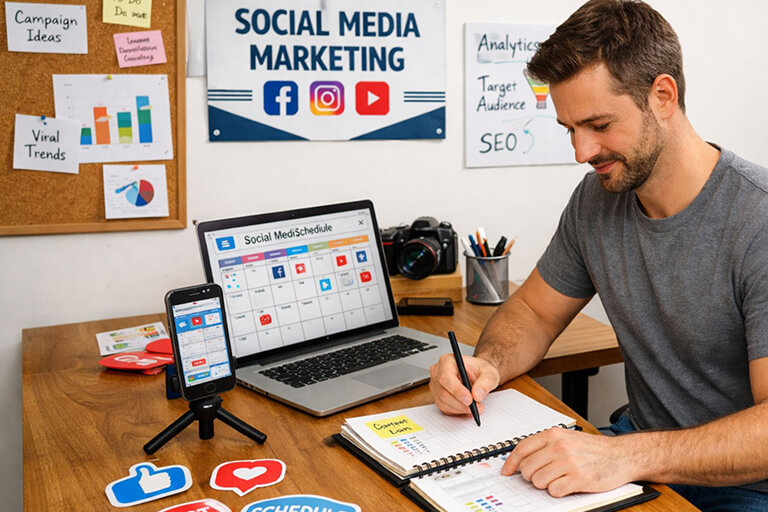
Publishing great content is only half the equation on social media. When that content appears matters just as much as what it says. Even high-quality posts can underperform if they are shared at the wrong time or without a consistent rhythm. Strategic scheduling helps brands reach more people, earn stronger engagement, and make better use of the effort already invested in content creation.
Maximizing reach is less about posting constantly and more about posting intentionally.
Understand when your audience is actually active
Every audience behaves differently. Posting at a universally “best” time rarely works across industries, locations, or platforms.
Instead, review platform analytics to identify when followers are most active and responsive. Tools inside Instagram Insights, Facebook Professional Dashboard, and TikTok Analytics reveal patterns around days, hours, and engagement trends.
Scheduling content around real audience behavior increases the likelihood that posts appear while people are scrolling rather than getting buried.
Match timing to platform behavior
Each social platform has its own consumption rhythm.
LinkedIn content often performs best during workday hours, while Instagram and TikTok see higher interaction during evenings and weekends. YouTube Shorts may gain traction hours after posting rather than immediately.
Social media research shared by Sprout Social highlights that aligning timing with platform-specific habits improves visibility without increasing posting frequency.
Consistency matters more than volume
Posting sporadically confuses both audiences and algorithms. A predictable schedule builds familiarity and trust over time.
Consistency does not mean daily posting. It means choosing a realistic cadence and sticking to it. Whether that is three times a week or once per day, reliability signals relevance and keeps content circulating longer.
Algorithms reward steady patterns more than bursts followed by silence.
Spread content types across the calendar
Posting the same type of content repeatedly can reduce engagement, even if the timing is optimal.
A balanced schedule might include
Educational posts
Short-form videos
Community engagement prompts
Promotional updates
User-generated content
Rotating formats keeps feeds fresh and prevents audience fatigue. Planning variety across the week also improves reach by appealing to different user preferences.
Schedule for momentum, not isolation
Posts perform better when they support each other. Scheduling content with a narrative or thematic flow encourages repeat engagement.
For example, a teaser post can precede a video, followed by a recap or discussion prompt. This sequencing keeps the audience engaged across multiple touchpoints rather than treating each post as a standalone effort.
Content sequencing strategies are frequently discussed by Hootsuite as a way to extend reach organically.
Use scheduling tools to stay consistent without burnout
Manual posting increases the risk of inconsistency. Scheduling tools allow brands to plan ahead while remaining flexible.
Platforms such as Meta Business Suite and Later make it easier to visualize calendars, adjust timing, and maintain regular posting without constant manual effort.
Planning ahead also frees time to engage with comments and messages, which further boosts reach.
Account for time zones and location
Brands with audiences across regions must consider time zone differences. Posting at a single time may only serve a portion of followers.
Staggering posts or prioritizing the most valuable region improves performance. Location awareness is especially important for brands targeting national or global audiences.
Local relevance still plays a major role in engagement and discoverability.
Review performance and adjust regularly
Scheduling is not a one-time decision. Audience habits shift, algorithms change, and content formats evolve.
Review engagement data monthly to identify patterns such as
Posts that gain traction hours later
Days that consistently underperform
Formats that perform better at specific times
Insights from Google Analytics and native platform data help refine timing decisions over time.
Avoid over-automation
While scheduling is valuable, fully automated feeds can feel disconnected. Leaving space for timely posts, trends, or real-time engagement keeps content human.
The strongest schedules balance planning with flexibility.
Conclusion
Content scheduling plays a critical role in maximizing social media reach. Understanding audience activity, aligning timing with platform behavior, maintaining consistency, and reviewing performance regularly all contribute to stronger visibility without increasing workload. Strategic scheduling ensures content meets audiences when attention is available, not after it has passed.
For brands seeking a more intentional approach to social media timing and planning, BearStar Marketing creates scheduling frameworks that align content themes, audience behavior, and platform dynamics. By structuring calendars around reach and engagement signals rather than guesswork, BearStar Marketing helps brands extend the lifespan and impact of every post they share.